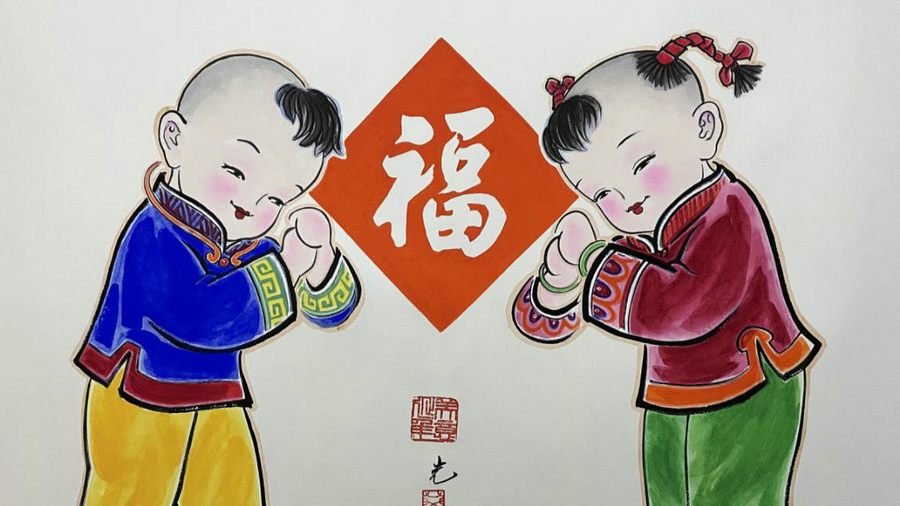
Mianzhu Woodblock New Year Paintings
Introduction
Mianzhu Woodblock New Year paintings are a distinguished form of traditional Chinese art, renowned for their vivid depictions and cultural significance. Originating from Mianzhu, a city in Sichuan province, these paintings are an integral part of China's rich artistic heritage, serving as decorations that celebrate Chinese New Year festivities. Typically, these paintings are displayed on doors, windows, or walls to invite heavenly blessings and ward off evil spirits, embodying the deep-rooted beliefs and customs associated with the Chinese New Year.
The tradition of hanging New Year paintings is centuries-old, with a primary focus on portraying door gods, designed to exorcise demons and bring good fortune. The practice involves meticulous processes of drawing, carving, and coloring, reflecting the artists' dedication and skill in maintaining this cultural legacy. Mianzhu Woodblock Paintings stand as one of the four most prestigious schools of woodblock paintings in China, celebrated for their intricate designs and diverse themes that span folk legends, myths, and auspicious symbols.
History
The history of Mianzhu Woodblock New Year paintings is deeply intertwined with the cultural evolution of Sichuan province. This form of art reached its zenith between the Ming Dynasty (1368-1644) and the Qing Dynasty (1644-1911), thriving in the city of Mianzhu and its surrounding areas. As a center of woodblock painting, Mianzhu not only preserved the traditional techniques but also expanded the repertoire of themes beyond the classic door gods, to include various elements of Chinese folklore and daily life.
Throughout history, Mianzhu paintings have been regarded as essential cultural artifacts that transmit the joys, fears, and aspirations of the people. Despite the challenges faced over time, including natural disasters such as the devastating Wenchuan earthquake in 2008, the resilience of the local artists and communities has ensured the survival and continued relevance of this art form. The earthquake caused significant damage to Mianzhu and its artistic heritage, but efforts to restore and innovate the traditional techniques have breathed new life into these paintings.
Techniques
Materials and Tools
Mianzhu Woodblock New Year paintings are created using a variety of traditional materials and tools, which contribute to the distinct appearance and quality of the artworks. The primary material used is wood, specifically for the carving of the blocks that serve as the templates for printing. These woodblocks are intricately carved with the desired designs, often featuring motifs that reflect Chinese folklore and symbolism.
In addition to wood, the artists use rice paper, known for its delicate texture and ability to absorb vibrant colors, enhancing the final printed image. Natural pigments are employed to achieve the rich hues characteristic of Mianzhu paintings, with each color carefully mixed to ensure consistency and depth. Brushes and other traditional tools are used for hand-coloring details, a process that requires precision and skill to achieve the desired effect.
Process
The creation of Mianzhu Woodblock New Year paintings involves a series of meticulous steps that highlight the craftsmanship and artistry of the practitioners. The process begins with the drawing of the initial design, which is then transferred onto a woodblock. Skilled artisans carve the design into the block, paying close attention to detail to ensure that the final print captures the essence of the original drawing.
Once the carving is complete, the surface of the block is coated with ink, and the inked block is pressed onto rice paper to transfer the image. This printing process requires expertise to achieve even ink distribution and a clear impression. After the initial print is made, artists use brushes to hand-color the image, bringing the design to life with vivid colors and intricate patterns. This combination of printing and hand-coloring is what gives Mianzhu paintings their unique and vibrant character.
Themes and Symbolism
Common Motifs
Mianzhu Woodblock New Year paintings are known for their rich thematic diversity, drawing inspiration from a wide range of cultural and spiritual sources. Common motifs include representations of door gods, which are believed to protect households from evil spirits and bring good fortune. These figures are often depicted in pairs, facing each other, as a symbol of balance and harmony.
Other prevalent themes in Mianzhu paintings include depictions of mythical creatures, such as dragons and phoenixes, which symbolize power, strength, and prosperity. Scenes from folk legends and traditional stories are also frequent subjects, reflecting the local culture and heritage of the Sichuan region. Additionally, auspicious symbols like the chubby baby, which represents longevity and fertility, are popular choices for New Year paintings.
Cultural Significance
The cultural significance of Mianzhu Woodblock New Year paintings extends beyond their aesthetic appeal, as they serve as a visual language for expressing hopes and aspirations. Each painting is imbued with symbolic meanings that resonate with the values and beliefs of the Chinese people. The tradition of displaying these paintings during the Chinese New Year is a way to connect with the past, celebrate the present, and look forward to the future with optimism.
These paintings are considered powerful talismans, inviting blessings and prosperity into homes. They are an embodiment of the communal spirit and shared cultural identity, offering a glimpse into the social and spiritual life of the community. As cultural artifacts, Mianzhu paintings play a vital role in preserving the intangible heritage of China, transmitting the wisdom and artistry of previous generations to the present day. Mianzhu Woodblock New Year Paintings was inscribed on China’s National Intangible Cultural Heritage List in 2006.
Preservation and Revival
Efforts to preserve and revive Mianzhu Woodblock New Year paintings have become increasingly important in the face of modernization and changing cultural landscapes. Recognizing their cultural value, the Chinese government has taken steps to protect and promote this art form as a national intangible cultural heritage. This designation has brought renewed attention to the traditional techniques and encouraged the continuation of the craft.
Local artisans and cultural institutions have also played a crucial role in the preservation of Mianzhu paintings. Through workshops, exhibitions, and educational programs, they aim to pass on the skills and knowledge to younger generations, ensuring the art form's survival. The involvement of families, like that of Li Fangfu, who have dedicated their lives to this craft, exemplifies the community's commitment to maintaining their cultural legacy.
In recent years, innovative approaches have been introduced to adapt Mianzhu paintings to contemporary tastes and markets. By incorporating new themes and experimenting with modern techniques, artists have been able to reach a broader audience, revitalizing interest in this traditional art form. These efforts have not only preserved the heritage of Mianzhu paintings but have also allowed them to evolve and thrive in a rapidly changing world.








